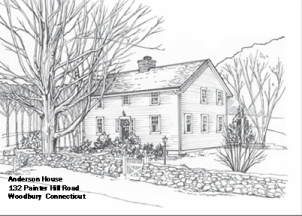
"The Typewriter" was one of the compositions which Leroy Anderson completed in Woodbury, Connecticut. This was at Painter Hill on October 9, 1950, the year after Eleanor and Leroy Anderson moved to Woodbury permanently.
About the music:
Leroy Anderson completed his composition "The Typewriter" on October 9, 1950 at his home on Painter Hill Road in Woodbury, Connecticut. This very short piece (1:45) which features a traditional, manual typewriter, best demonstrates Anderson's ingenuity and humor.
In the first recording of "The Typewriter" on September 8, 1953 for Decca Records, Anderson conducted a studio orchestra in New York City *. A stenography school across the street from the recording studio had many students who were learning to type. A few of them were invited to audition at the recording studio on their lunch break. As it turned out, none of the typists from the school could type fast enough. So a percussionist was selected who gave a fine performance. One has to wonder if a marketing person for the publisher, Mills Music, thought that this would make an attractive photo-op and story line.
Rather than typing using random keys, the typewriter is modified so that only two keys work. The keys are chosen so that they will not jamb. Sturdy paper gives a better sound. A desk bell takes the place of the bell in the typewriter which sounds at the end of each "line" of typing. The interplay between the orchestra and the typist is both amusing and clever resulting in some surprises when the pattern of the bell diverges from the expected rhythm.
Anderson's publisher, Mills Music, thought that this novelty piece would have so little appeal as to not be worth printing. Anderson's recording for Decca created an immediate and strong demand for the sheet music. Even though manual typewriters are not in frequent use today, Leroy Anderson's "The Typewriter" remains popular with audiences worldwide.
~ ~ ~
The first recording was not with the Boston Pops Orchestra. The studio orchestra which Anderson conducted was an assemblage of musicians from various orchestras in NYC, Philadelphia and Chicago who were hired for the recording sessions.
The Typewriter has been recorded by many artists, including: Arthur Fiedler with the Boston Pops, guitarist Alan Hanlon, Spike Jones, Frederick Fennell with the Eastman Orchestra and also with the Tokyo Wind Orchestra, Leonard Slatkin with the St Louis Symphony Orchestra, Pinchas Steinberg with the Cologne Radio Orchestra, pianist Marco Rizo, and the 101 Strings.
Notable soloists on the Typewriter have included Seiji Ozawa, conductor of the Boston Symphony Orchestra. Maestro Ozawa performed this piece with Boston
Pops conductor John Williams in a 1998 televised fund-raising concert on Boston's WCVB-TV. Ozawa appeared in the traditional Boston Pops "Typewriter outfit" - green visor cap and a big stogie! The rock group Aerosmith's lead singer Steve Tyler was a soloist in a special 1999 Boston Pops concert. Leonard Slatkin took his turn as the soloist when he performed in a 1999 New Year's Eve concert with Murray Sidlin conducting the National Symphony Orchestra. They displayed a banner that proclaimed the solo "instrument" was a "Baldway". In Winterthur, Switzerland, conductor Reto Parolari rigged his typewriter so that one person can play all the parts - keys, bell and carriage return - and used heavy card stock for his "letter". This amplifies the sound of the typewriter.
Factual errors by various journalists, bloggers and other amateurs of music criticism
Alex Burns of England, in her blog post of April 9, 2020, mistakenly described Leroy Anderson as having composed The Typewriter "during a trip to Woodbury, Connecticut." Wrong: Leroy Anderson moved permanently to Woodbury, Connecticut in 1949. Leroy Anderson composed "The Typewriter" in his home on Painter Hill Road, Woodbury.
Alex Burns then wrote that "Anderson conducted the Boston Pops Orchestra to make a recording of the piece in 1953." Wrong: Leroy Anderson conducted a studio orchestra in New York City for the Decca Records recording. The Boston Pops Orchestra's members did not participate in the recording session.
Dan Rather and Elliot Kirschner wrote on May 13, 2013 in a blog article titled "The Music of the Typewriter - A Reason to Smile," that Arthur Fiedler premiered The Typewriter with the boston Pops Orchestra in 1953. Wrong: The Typewriter received its first performance on September 8, 1953, with Leroy Anderson conducting a studio orchestra in a recording session for Decca Records, New York, New York.
Two Excellent Blog Posts about The Typewriter by Leroy Anderson
"Using Imagery in Music: Leroy Anderson and The Typewriter" by Michael Lanier, posted to his blog on January 12, 2017 and re-posted below with permission of the author
THE TYPEWRITER
Using Imagery in Music: Leroy Anderson and The Typewriter
When Anderson wrote "The Typewriter", he used the keys of the typewriter as the main percussion, with a handbell to replace the bell within the typewriter, and the carriage return as other forms of percussion. There are no drums heard in this piece, because the drummer was the one playing the typewriter, as the song is very fast-paced. Anderson actually claimed that only drummers had the wrist flexibility to be able to play the typewriter in the piece at full speed. I'm not a drummer, but I actually have performed the piece live before, and despite how simple it may sound when heard, it's actually quite difficult to play. But the imagery and attention-focusing in this piece are phenomenal, because the typewriter is the lead instrument.
Although the typewriter leads the orchestra, there is still an intelligent musical theme playing behind it. In just ninety seconds of music, the song starts out in G major, then modulating to E minor for a more intense sound, and then coming back up again to G major to repeat the established theme. Then the piece gives the typist a break by playing a slower bit in the key of C major, before going back to the theme in G and ending from there. So, the structure is essentially ABACA. In that time, the listener's attention is focused on the furious typing, the intense feel of the E minor section (aka the B section), the annoying repetition of the demanding bell, the typing again, the pizzicato in the C section (which coincidentally is in the key of C), and then back again to the A section, bringing everything together- the typing, the bell, and the strings- to have the listener listen to the piece as a whole for the first time, and leaving him satisfied with what he's heard, despite the fact that the entire process only took one minute and forty-five seconds.
- Michael Lanier
Biographical Videos about Leroy Anderson
The Leroy Anderson Foundation is producing a series of short biographical videos about Leroy Anderson. They are between 2 and 3 minutes long and may be seen without advertising on this website. The first videos are:
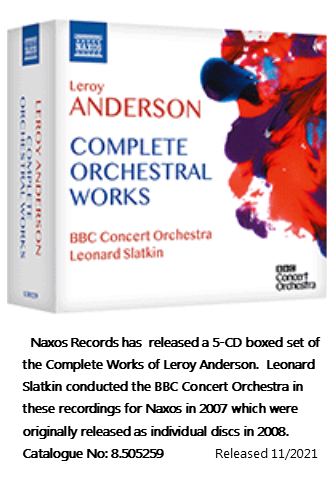
"Complete Works of Leroy Anderson" NAXOS 5-CD Boxed Set
Naxos Records has released a 5-CD boxed set of the Complete Works of Leroy Anderson. Leonard Slatkin conducted the BBC Concert Orchestra in these recordings for Naxos in 2007 which were originally released as individual discs in 2008. Catalogue No: 8.505259 Released 11/2021
AI is creating factual errors in the biography of Leroy Anderson
Anyone researching the life and music of Leroy Anderson should consult Leroy Anderson's official biography on the websites: www.leroyanderson.com; and www.leroyandersonfoundation.org. Both websites were created and are managed by the Leroy Anderson family.
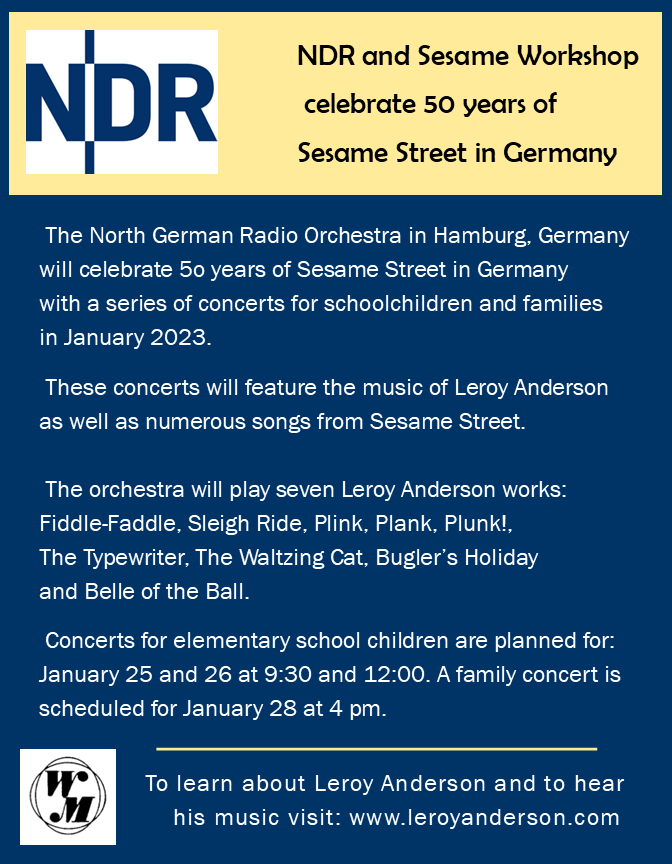
North German Radio Orchestra Celebrates 50 Years of Sesame Street with concerts featuring music of Leroy Anderson
ASCAP, the American Society of Composers, Authors and Publishers, named Sleigh Ride the most popular piece of Christmas music in the USA in 2021 [The Top 25 ASCAP Holiday Songs of 2021.pdf].
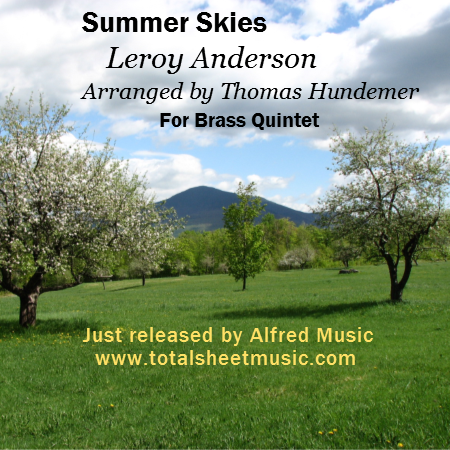
New Arrangement by Thomas Hundemer for Brass Quintet of "Summer Skies" by Leroy Anderson. This arrangement is published by Alfred Music. Thomas Hundemer's arrangement of "Summer Skies" for Woodwind Quintet will be available soon - also from Alfred.
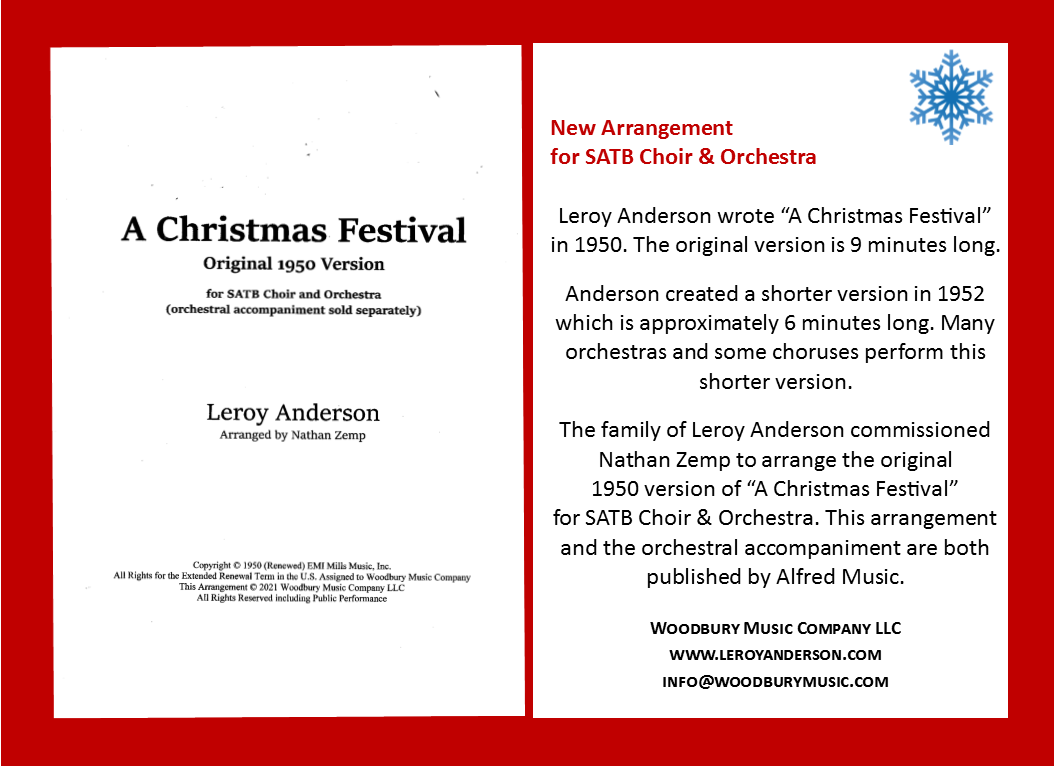
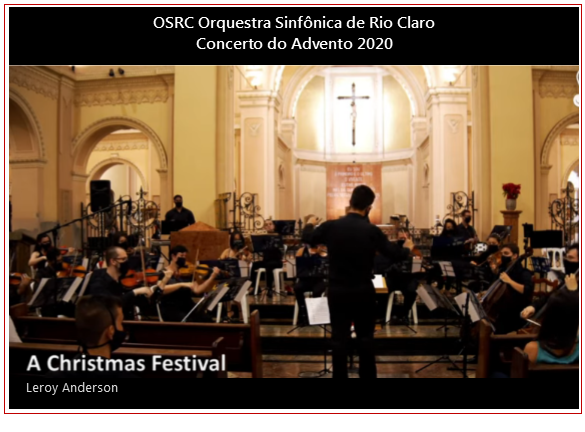
New Arrangement for SATB Choir & Orchestra. Leroy Anderson wrote "A Christmas Festival" in 1950. The original version is 9 minutes long. Anderson created a shorter version in 1952 which is approximately 6 minutes long. Many orchestras and some choruses perform this shorter version. The family of Leroy Anderson commissioned Nathan Zemp to arrange the original 1950 version of "A Christmas Festival" for SATB Choir & Orchestra. This arrangement and the orchestral accompaniment are both published by Alfred Music.
"Sleigh Ride", "A Christmas Festival", "Suites of Carols" Holiday Concerts 2020 - 2021
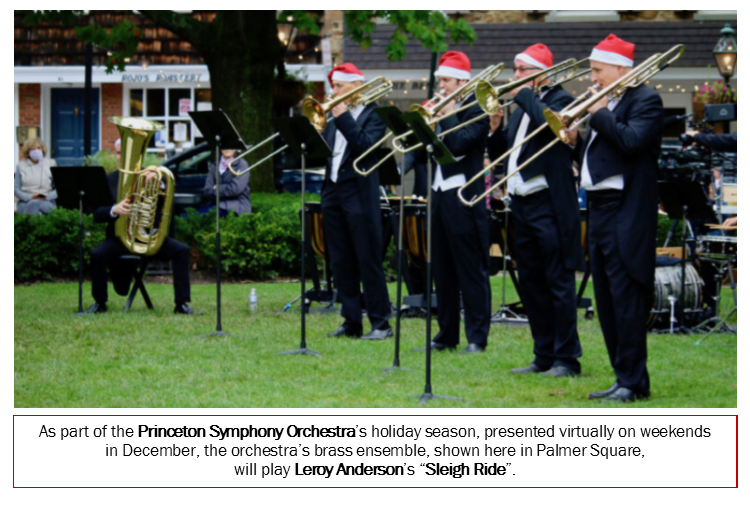
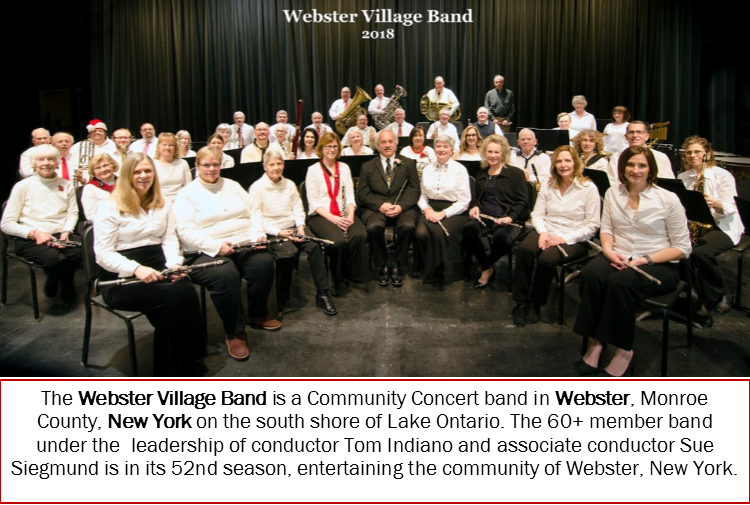
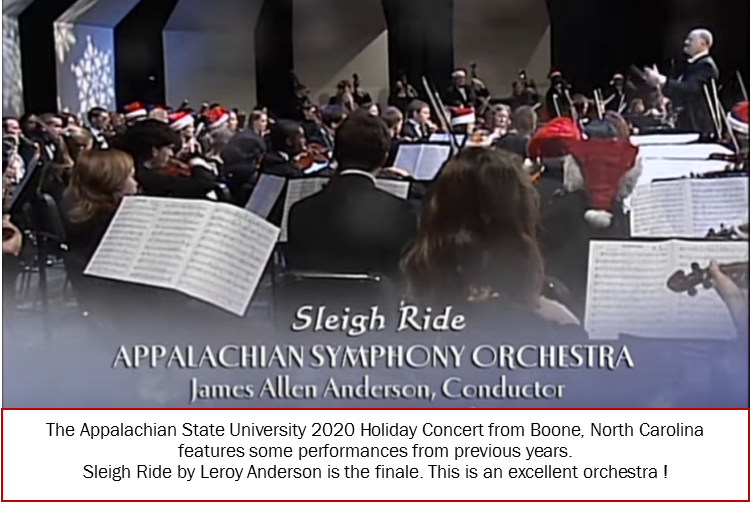
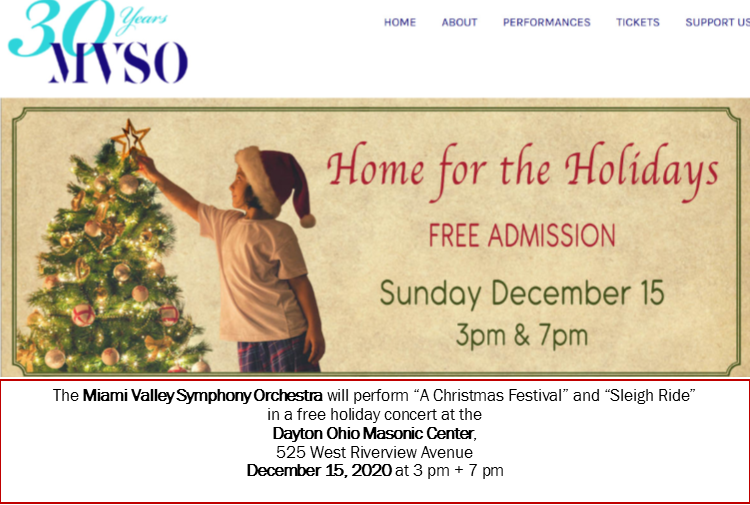
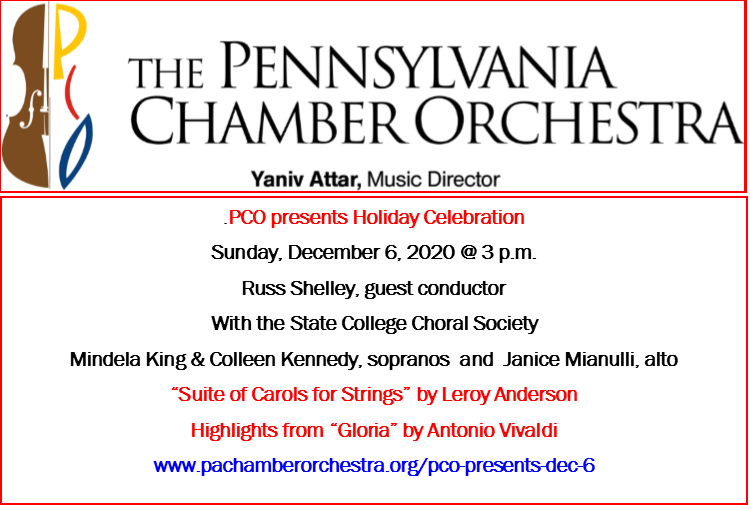
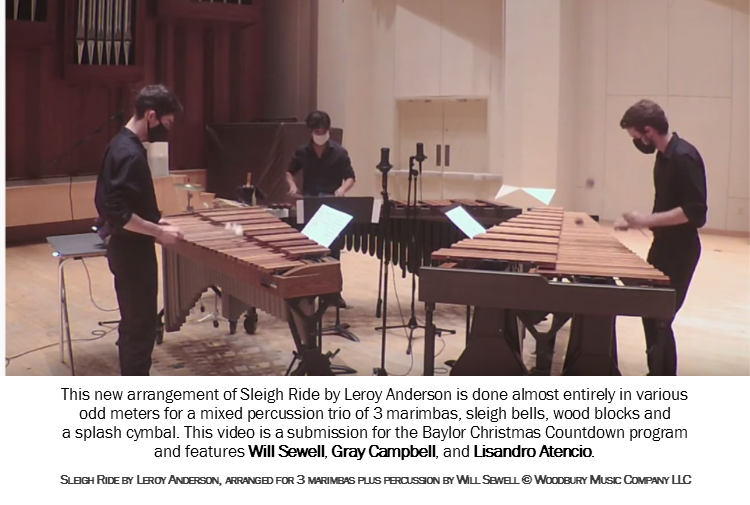
Thank you to the orchestras, bands, soloists, choruses and other ensembles all over the world who are preparing virtual performances of "Sleigh Ride", "A Christmas Festival", "Suites of Carols" for brass choir, string orchestra and woodwind ensemble, and other Leroy Anderson compositions in November and December 2020 and January 2021. We look forward to sharing the links to your performances below on this page if the links are available to the public. - the Anderson Family
The following is a partial list of the orchestras, bands and other groups which have obtained permission to produce and stream/post to the internet a recording of music by Leroy Anderson in their holiday concerts from November and December 2020 through January 2021.
ASCAP, the American Society of Composers, Authors and Publishers, has ranked "Sleigh Ride" by Leroy Anderson (1948), lyrics by Mitchell Parish (1950) #4 on the top 25 most popular holiday songs of 2020.
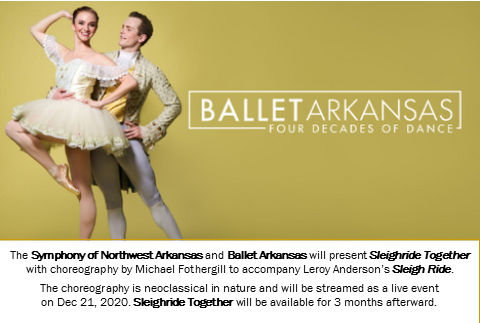
Symphony of Northwest Arkansas, Fayetteville, Arkansas
and Ballet Arkansas performing "Sleighride Together"
Ballet Arkansas + Symphony of Northwest Arkansas present Sleighride Together with choreography by Michael Fothergill to accompany Leroy Anderson's Sleigh Ride.
// Leroy Anderson had such a gift for scoring the orchestra to sound like a sleigh dashing through the snow, including sleigh bells, the cracking of the whip and even a horse's whinny performed by the trumpet at the end.
Teresa Muir, President DuPage Symphony Orchestra, Illinois
Blair Academy Wind Ensemble, Blairstown, New Jersey
"A Christmas Festival" Capital Philharmonic of Trenton, New Jersey, Daniel Spalding, conductor and Princeton Girl Choir, Lynnel Joy Jenkins, Artistic Director, New Jersey
// Holiday concerts would not be what they are without "Sleigh Ride"
Glen Cortese, Artistic Director of Schenectady Symphony Orchestra and of Western NY Chamber Orchestra; Artist in Residence, Cathedral of St. John the Divine
Tintinna il Natale (Sleigh Ride) - Coro Notemagia, Trentinno, Italia; Armonizzazione coro e rivisitazione testo: Nazarena Raos, Eleonora Barozzi, Luca Dossi; Il Coro Notemagia è diretto da Eleonora Barozzi e Nazarena Raos
Japan
Otoya Harmonica (bomxboa), Japan: "The Syncopated Clock" for 4 harmonicas (arr. Hatsumi Inoue)
1966 Quartet, "Bugler's Holiday" with variations, Japan
Auckland Philharmonia Orchestra
Auckland, New Zealand
Norway
Anniken Ottersen Lindbak, "Sleigh Ride" from the concert: "Light up the dark days" Dec 18, 2020
Piano: Johannes Gartland, Trommer: Magnus Rønning, Bass: Gaute Rosvold, Gitar: Sindre Brynildsen, Trombone: Knut-Erik Kjøge, Trombone: Lina Steen, Saxofon: Marte Dreierstad, Saxofon: Stine Maehlum
Military Bands of the USA, Canada and the United Kingdom Holiday Concerts 2020 - 2021
The Anderson family is extremely proud that Leroy Anderson's music is frequently performed by the bands and other ensembles of the US Forces and by the military bands of Canada, the United Kingdom and those of many European countries.
United States
The Fourth Infantry Division U.S. Army Band at Fort Collins, Colorado recorded A Rocky Mountain Holiday Concert with numerous ensembles of musicians performing unique arrangements of holiday songs in a 32-minute show you must see. Many people make humerous holiday music videos. This is perhaps the most creative we have seen. The finale is the Ivy Wind Ensemble giving a superb performance of "Sleigh Ride" with a horse whinny played on French horn - the first we have heard.
U.S. Army Band, Pershing's Own featuring SSgt. Nicole Bouffard singing to the U.S. Army Band's arrangement of Sleigh Ride.
The U.S. Army Field Band at Fort Meade, Virginia will perform a jazz version of "Sleigh Ride" (vocal) and post it to the band's Facebook page this December, 2020.
The U.S. Navy Band, U.S. Fleet Forces Band and the U.S. Navy Band Southeast will each perform "Sleigh Ride" and post a video to their website or social media page this December 2020.
The United States Air Force Band at Washington, D.C. will perform and post "Sleigh Ride" to the band's Facebook page this November, 2020.
The United States Air Force Band of the West "Holiday in Blue" will perform and post "Sleigh Ride" to the band's Facebook page this December, 2020.
The U.S. Air Force "Airmen of Note" jazz band will perform and post "Sleigh Ride" to the band's Facebook page this November, 2020.
The U.S. Army Band Bluegrass Band "Country Roads" will perform "Sleigh Ride" in the "Shenandoah Thanksgiving Video", a free performance for viewer enjoyment with a holiday theme.
The 77th Army Band at Fort Sill, Oklahoma will perform and post "Bugler's Holiday" to the band's Facebook page this November 7, 2020.
Canada
The Naden Band of the Royal Canadian Navy in Victoria, British Columbia will perform "Sleigh Ride" during their holiday concert and post a video of the performance to their social media page.
The 36th Canadian Brigade Group Band of the Royal Canadian Army in Halifax, Nova Scotia will perform "Sleigh Ride" during their holiday concert and post a video of the performance to their social media page.
United Kingdom
The Band of the Welsh Guards, United Kingdom, will perform "A Christmas Festival" and post a video of the performance to their social media page.
The British Army Bands, United Kingdom, will perform "A Christmas Festival" and post a video of the performance to their social media page.
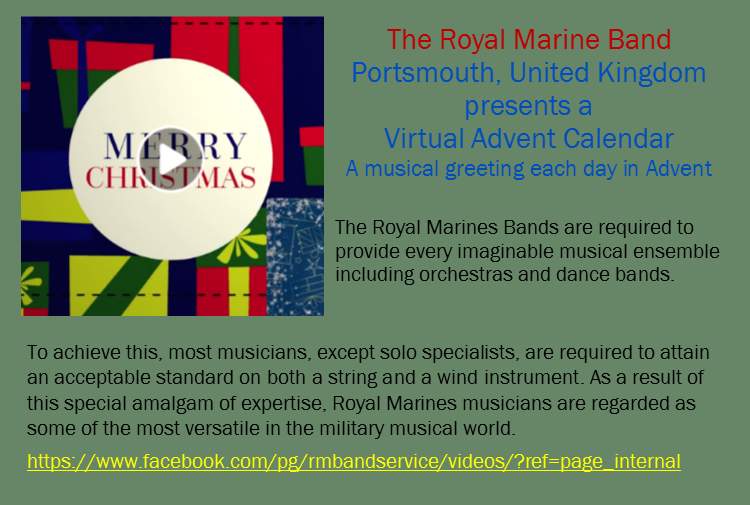
The The Royal Marine Band, Portsmouth, United Kingdom, will perform "Sleigh Ride" and post a video of the performance to their social media page.
Leroy Anderson Places
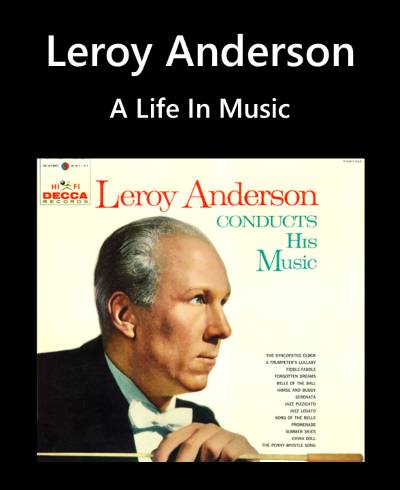
Born and raised in Cambridge, Massachusetts, Leroy Anderson lived in Woodbury, Connecticut from 1949 until his death in 1975. The National Park Service named the Leroy Anderson House to the National Register of Historic Places. The Leroy Anderson House has been designated as an Historic House Museum by the Town of Woodbury.
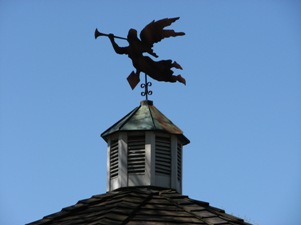
Leroy Anderson Memorial Bandstand
Leroy Anderson Memorial Bandstand, North Green, 11 Main Street South, Woodbury, Connecticut
The Leroy Anderson Memorial Bandstand was built by the Woodbury Lions Club in 1986 and was dedicated to the memory of Leroy Anderson on September 16, 1986 during a concert by the West Point Military Academy Band. The concert took place on the North Green near the bandstand.
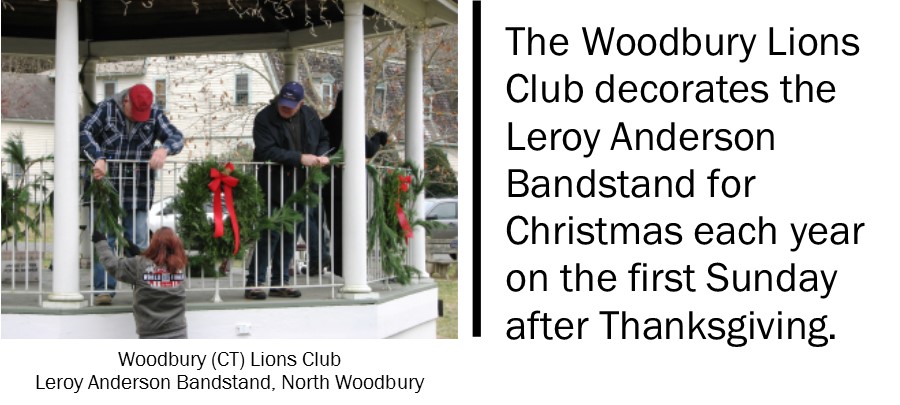
The Woodbury Lions Club decorates the bandstand for Christmas each year on the first Sunday after Thanksgiving. The lighting of the Woodbury Christmas Tree on the North Green takes place on the first Saturday in December each year.
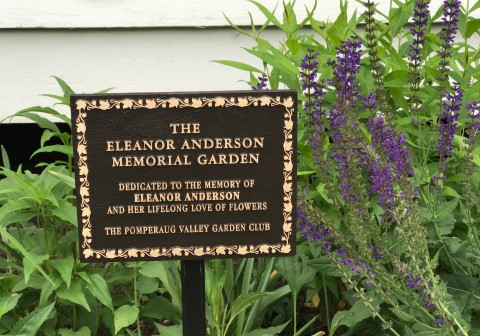
Eleanor Anderson Memorial Garden, North Green, 11 Main Street South, Woodbury, Connecticut
The Pomperaug Valley Garden Club dedicated the renovated garden surrounding the Leroy Anderson Memorial Bandstand on Woodbury's North Green to the memory of Eleanor Anderson, the widow of composer Leroy Anderson and a longtime member of the garden club who died in 2014. The dedication took place on June 16, 2018.
Leroy and Eleanor Anderson are buried in Woodbury's New North Cemetery in Woodbury, Connecticut. From the four-way intersection of Washington Avenue, Church Street and Linden Street, travel West on the entrance road of the cemetery. The graves of Leroy and Eleanor Anderson are on your right (to the North) just South of the large flagpole. The graves are adjacent to the West-running entrance road.

 Composition: "The Typewriter"